Monday, April 27, 2015

Strict safety norms should be enforced

Strict safety norms should be enforced

Reader is concerned about workers ignoring safety measures when at construction sites.
Abu Dhabi

World Day for Safety and Health at Work is being celebrated tomorrow, April 28, and our highest priority should be oriented towards the principle of prevention of danger.

A look at some of the maintenance activities being carried out by the staff of some companies that work on the installation of advertisement stickers on high rise buildings within the capital made me write about this important safety issue. They use the suspended scaffolding to paste these stickers on the windows. However, observing them at close quarters I noticed that most of them were not wearing appropriate safety gear.

My fear aggravated when I noticed that a group of construction workers who were working on seven-storey building were carrying out their jobs without wearing any safety gear. This was alarming and there was no way I could reach out to them and inform them to adhere to safety measures.

These two observations highlight the need for stricter enforcement of safety norms. We do note that companies have strict safety guidelines in place for the welfare of their workforce. However, there is always an exception. Some companies even hire part-time workers, and it appears that safety is not a matter of priority for them and precautionary measures are sidelined. This is dangerous as even a minor miss may end up in loss of life or permanent injury to the worker involved.

Through this report, I request the concerned authorities to consider this matter and enforce stricter rules for workers who engage in jobs at high altitudes. The need for a standard acknowledgement and acceptance to conform to safety standards is essential when permits for such jobs to be carried out are issued.

Let ‘Safety First’ be on everyone’s mind at all time. Keep reminding each other and remembering with a strong inner sense the three key notes: ‘Safety for me, for you and for everyone’ as a mantra to achieve better safety results.

  
— The reader is an operations manager based in Abu Dhabi.


Be a community reporter. Tell us what is happening in your community. Send us your videos and pictures at readers@gulfnews.com


Saturday, April 25, 2015

ISC - Nucleus UAE Open Youth Festival 2015


India Social & Cultural Centre (ISC Abu Dhabi), the premier socio-cultural organization for expatriate Indians in UAE, is organizing  UAE OPEN YOUTH FESTIVAL 2015 on 7th, 8th and 9th of May 2015, with a large number of School students’ participation from all over UAE.

The show will be setting a new standard in this form of competition and it is designed to be one of the most challenging competition ever to be held in the UAE.

Contestants will compete in 18 arts field at 5 simultaneous venues within the ISC premises over these three days.

These performances will be evaluated and judged by prominent Judging panels from India.

Results will be declared immediately after each programme is completed through ISC website and official electronic media associated with the event.

Kindly provide enough circulation to find the talents in UAE.


Regards
Godfrey Antony
Hon. Literary Secretary


Application form:


Application form can also be obtained from:

India Social & Cultural Centre
P. O. Box: 816
Abu Dhabi
U.A.E
Tel:  02 - 6730066
Fax: 02 - 6732899
E-mail: insocial@emirates.net.ae
           : info@iscabudhabi.com
Web    : www.iscabudhabi.com

Short Take: Action pack - Gulf Today Dt 25 April 2015

Short Take: Action pack

It was a short notice invite for a presentation. I couldn’t say no to it when I looked at the presenter’s name and details of the invitees he was speaking to.

The audience were a group of students in their final year of graduation coming from the prestigious French Petroleum university to learn about the finer aspects of the industry in the region.
The presenter was Sultan Al Hajji, a self-made Oil and Gas industry senior in the region. Educated in the US and France, he started from a junior level in the industry and progressed along to one of the senior most level within our company.

In his presentation he talked eloquently about the industry aspects and about the UAE and how and where it stands in the technological and economic forefront of developments happening worldwide.

At the end of the session, while answering the queries of eager students who were extracting more treasures from him, he came out with a gem of an action pack for them.

It was about the importance of networking for students as a means of improving their professional vistas to a greater horizon. He said to them to work hard as there is no alternate option for success.

At the same time, he told them to identify their primary and secondary interest levels and start networking with the right choice of contemporaries, seniors and experts to consistently update them with what is happening around them.

Sharing knowledge and expertise is the pathway to a successful career ahead. Identifying right mentors and right network to be in is essential for students.

Later, at some point of time, whenever these like-minded and networked contacts catch up with each other, it will prove that they all carried the same zest for success in life.

Moreover, it will not be a surprise to see that many of them may be knowing each other, due to their focus and path they opted for their personal and professional success.

Looking at the students’ expression at the end of the session, I felt it would be an everlasting action reminder and impression they would carry along from this visit to their future ahead. 

Pearls of wisdom like these are very rare to get these days.


Ramesh Menon, Abu Dhabi
Short Take - Gulf Today
Dt. 25th April 2015

Tuesday, April 21, 2015

La Femis Gulf Film Programme 2015 - learn film making in Paris at La Fémis


If you know any UAE national student interested in Film making, kindly share it with him or her to apply for this scholarship.

Friday, April 17, 2015

TheNational@7: A truly national conversation with our regular letter writers


Ramesh Menon, Indian, living in Abu Dhabi
I’ve been writing letters to The National since its inception and have always found its best qualities are to raise important issues and to reflect the pulse of those living in the UAE. Letters to the editor bring important topics to the attention of the relevant authorities and there have been several instances when quick action has been taken on issues raised in this way. These include pedestrian problems, road safety, labour welfare, consumer issues and others. I am always optimistic of a positive outcome when I raise a community-related issue through the letters section of The National.


http://www.thenational.ae/opinion/feedback/20150408/thenational7-a-truly-national-conversation-with-our-regular-letter-writers#page1

TheNational@7: Citizen journalists answer the call

TheNational@7: Citizen journalists answer the call


The sight of two window washers working untethered on a narrow 13th-floor ledge of an Abu Dhabi high-rise was shocking.
They were equipped with the proper safety gear but had detached themselves from their safety ropes, leaving them at risk of falling to their deaths on the bustling street below.
The startled witness to this casual disregard of safety was Ramesh Menon, a technical officer at an oil firm who recorded it with his camera then alerted both the building management and also The National.
The effect was swift and emphatic: the window washers’ employer had its contract with Abu Dhabi Mall cancelled with immediate effect.
But because it was also featured in The National, publicity about the incident sparked a debate among those living here about the sometimes lax culture of safety in the UAE, including an editorial calling for zero tolerance towards those who take safety shortcuts as well as a flurry of letters to the editor on the subject.
What it also demonstrated in a wider sense is the way in which The National is an active part of our community. The newspaper does not just inform and entertain those living in the UAE – that flow of information goes both ways.
In Mr Menon and countless other ordinary people going about their lives, the newspapers’ eyes and ears in the community extend far beyond those of our reporters.
This is what the American playwright Arthur Miller was getting at more than half a century ago when he defined a good newspaper as “a nation talking to itself”.
Anyone who wants to know the hot topics of UAE society need only see how our readers express themselves, either through letters or on The National’s social media feeds on Facebook and Twitter.
Rising rents and the general cost of living, the plight of children caught in conflict zones, driver behaviour on the country’s roads, animal cruelty, the property market’s fluctuations, whether mothers should be compelled to breastfeed new babies, gratitude for the UAE’s accommodation of followers of other faiths, the process of Emiratisation and concern with the welfare of those on the bottom rungs of the economic ladder are all topics on which The National’s readers voice strong views.
We have learnt to listen and take heed when an issue ignites our readers, shaping our response with the input of the community.
In the best cases, this dialogue can both highlight a problem and lead to its solution. In the window washers’ case, it meant there did not need to be a tragedy – for the negligent window washer or any innocent pedestrian walking below – before action was taken.
The same dynamic applied when another reader’s tip alerted us to theplight of two puppies – one with a paw deliberately hacked off and the other with damage to its foot pads – that were abandoned in the desert outside Dubai and left to die.
Our readers were shocked by this wanton act of cruelty, but it ended happily for Stumpy and Bernard, as the two puppies were named by their rescuers. Readers donated more than Dh7,000 – enough to pay for their medical treatment – and this included Dh3,000 from an American reader who saw the story on The National’s website.
The best news came from a couple who read The National. Hank Harrington, a helicopter pilot with Dubai Royal Air Wing, and his wife, Lynn,adopted the puppies, who will have a large garden to play in when the couple relocate to Britain in six months.
These are but a couple of examples of the wave of instances of what has been dubbed “citizen journalism”.
This mirrors the changes that have taken place since The National’s first edition was published seven years ago. It seems like ancient history now, but social media networks, microblogging sites and smartphones were all in their infancy on April 17, 2008.
Facebook had only 80 million members then, compared to 1.4 billion now; Twitter members were collectively sending an average of just about 1 million tweets per day, a fraction of the 50 million now; and the iPhone had been launched in the United States less than a year earlier. Today the UAE has the highest per capita use of smartphones in the world.
These forces combined to enable those living here to interact with The National in a way unimaginable to previous generations of journalists. Now, when there is a multicar pile-up on a foggy road or a major fire in the UAE, we receive images from readers in minutes. Comments on The National’s website come from every corner of the world.
This is as it should be, when a newspaper is having a dialogue with the community it was established to serve.
http://www.thenational.ae/uae/20150417/thenational7-citizen-journalists-answer-the-call
My thank you note:
It was surprising to see a special mention about me in the 7th Anniversary edition of The National! Safety First. Let the mantra within us be "Safety for Me, Safety for You and Safety for ALL".
Thank you The National team. 


Wednesday, April 15, 2015

Daily Passionate Photography Thoughts - Do you hear the tinggggg?

Daily Passionate Photography Thoughts - Do you hear the tinggggg?


Dear Friends,

I am thrilled today because my memories are taking me to my childhood days, when I lived at my ancestral home at Oorakam near Trichur within a big joint family amongst a group of children of various ages within the family and surroundings. Not like these days, gifts and pocket money were occasional and we had to wait for either Onam, or Vishu to get a pair of new dress or some money within our pocket for utilising for our own dream requirement. Money those days remained within the boundaries of maximum of a one rupee coin, which was by itself huge. It came to us only during Vishu when we get Vishu Kai neettam (gift of coins by eldest member of the family).

At our home, it was the right of Appettan, who is my grandmothers brother and eldest male member of the family to give this customary gift to all other family members including children. He keeps several coins with him of various denominations within the boundary of one rupee and distribute it to all according to age and his liking. Whatever the denomination we were all thrilled to get that precious gift from him on that auspicious day and very happily wait for it after our daily religious rituals.

Once we have this gift, all the boys group themselves and then go and get a rubber ball or a smaller football, to replace the existing old ones for us to play with. Those days, we used to get a medium 8 to 10 cm diameter sized for a nominal amount, and mostly, it was the only luxurious play item we all shared.

On some odd years, we had special appearances during these Vishu season by other senior male members of the family who were working outside of Kerala. So, as a mark of affection, they also discretely gave us additional coins of bigger denominations, even one rupee itself. This made a huge difference to all of us. We will then group ourselves and run to Devassy’s shop which is in the nearest town, that is Cherpu for a bigger ball, say about 25 cms diameter in size. The generous contribution means a lot. Bigger in size, bigger in temper, and the more reach it has. The “tingggggg” sound it produces when hit makes a huge thrill to all of us and the thrill of it keeps us grouped and cheerful for many days to come.

I am experiencing that odd gift and that tinggg thing in my mind today, by the visit of three little princess who came to see vishukani and get vishu kaineettam from us.

Education in all fields is mainly a self interest process. Many times due to various reasons, we do not get time to study a subject. But a systematic self learning process will take us to greater heights in those fields interesting for us. It is our responsibility to share and teach the new generation what we experienced. 

Let them learn to observe the characters, the nature, and be self sufficient to progress in life ahead. 

God bless you all and enjoy your week ahead by liking what you do and doing what you like.

Ramesh Menon
15th April 2015

Happy Vishu


Monday, April 13, 2015

Safety rules are being breached

Safety rules are being breached


I have seen workers in harnesses installing billboards or putting stickers on high-rises. But when I looked closely, I noticed that most of them did not have adequate safety gear. This has happened on more than two occasions.

Once, I was frightened for a group of men who were working on a seven-storey building without any protective gear whatsoever. I am sure that these are not stray cases. People will continue to flout the safety rules if such lapses are not reported.

At the same time, strict enforcement of rules is necessary.

It’s mostly smaller companies that ignore the rules as they engage contract or part-time workers. 

They need to be monitored all the time.


Ramesh Menon, Abu Dhabi
To read it in original, please visit The National online.

Sunday, April 12, 2015

Parents need to take absolute care - Gulf News Debate - The ethics of Facebook friends Dt 12th April 2014

Parents need to take absolute care

This is an important topic with modern day relevance connecting academic and family values. Literally, every school-going child in the UAE is exposed to digital media in one way or another. Social media like Facebook and WhatsApp are good when used with parental assistance. Prolonged one-on-one correspondence and interactions on these online platforms without supervision will definitely give opportunities to peep into one another’s personal matters and many times it can go outside the boundaries of etiquette and morality. A school-going child up to his graduate level does require parental monitoring. Absolute care should be taken to follow them, their activities within and outside school to make sure they are progressing on the right path.
Children are exposed to knowledge and information much easier than us and it is a parent’s duty to make sure that their children is not going astray from his or his family’s goals and dreams. The educational authorities and schools should give this subject greater thought and study the probability of taking the right measures to define which medium and up to what extent teachers and students can interact on social media.

From Mr Ramesh Menon
Abu Dhabi

Saturday, April 11, 2015

Photo Speaks : Home is where the heart is. A curry tree from Kerala.

Home is where the heart is. A curry tree from Kerala.


The curry tree (Murraya koenigii or Bergera koenigii) is a tropical to sub-tropical tree in the family Rutaceae (the rue family, which includes rue, citrus, and satinwood), which is native to India and Sri Lanka.

Its leaves are used in many dishes in India and neighbouring countries. Often used in curries, the leaves are generally called by the name 'curry leaves,' although they are also literally 'sweet neem leaves' in most Indian languages (as opposed to ordinary neem leaves which are very bitter and in the family Meliaceae, not Rutaceae).

Description

The small flowers are white and fragrant.

It is a small tree, growing 4–6 m (13–20 feet) tall, with a trunk up to 40 cm (16 in) diameter. The aromatic leaves are pinnate, with 11-21 leaflets, each leaflet 2–4 cm (0.79–1.57 in) long and 1–2 cm (0.39–0.79 in) broad. The plant produces small white flowers which can self-pollinate to produce small shiny-black berries containing a single, large viable seed. Though the berry pulp is edible -- with a sweet but medicinal flavor -- in general, neither the pulp nor seed are used for culinary purposes.

The species name commemorates the botanist Johann König.

Uses

The leaves are highly valued as seasoning in southern and west-coast Indian cooking, and Sri Lankan cooking ( කරපිංචා), especially in curries, usually fried along with the chopped onion in the first stage of the preparation. They are also used to make thoran, vada, rasam and kadhi. In their fresh form, they have a short shelf life and do not keep well in the refrigerator. They are also available dried, though the aroma is largely inferior.

The leaves of Murraya koenigii are also used as an herb in Ayurvedic medicine. They are believed to possess anti-diabetic properties. [unreliable medical source?]

Although most commonly used in curries, leaves from the curry tree can be used in many other dishes to add flavor. In Cambodia, Khmer toast the leaves in an open flame or roast it until crispy and then crush it into a soured soup dish called Maju Krueng.

In the absence of tulsi leaves, curry leaves are used for rituals and pujas.

Propagation

Seeds must be ripe and fresh to plant; dried or shriveled fruits are not viable. One can plant the whole fruit, but it is best to remove the pulp before planting in potting mix that is kept moist but not wet.
Stem cuttings can be also used for propagation.

Chemical constituents

Girinimbine structure. Some of the primary alkaloids found in the Curry Tree leaves, stems, and seeds are as follows: Mahanimbine, girinimbine, koenimbine, isomahanine, mahanine, Indicolactone, 2-methoxy-3-methyl-carbazole.

A 2011 study of girinimbine, a carbazole alkaloid isolated from this plant, found that it inhibited the growth and induced apoptosis in human hepatocellular carcinoma, HepG2 cells in vitro.


‪#‎ClicksandWrites ‪#‎PassionatePhotographers
Text source: Wikipedia
Photo by Ramesh Menon, Abu Dhabi

Changing world - Gulf Today - Short Take - Dt 11th April 2015

Changing world


Every morning when I go to office, I see a little girl going to her school. She will be struggling to smile and say good morning as she is yet to awake from her sleep. Her mother will be carrying the bags and bottle and literally carrying her to the waiting bus.

Days went on and suddenly one day as I was going to office, I noticed all the three members of the family together. The girl was in a cheerful mood and said to me, “We are leaving for India!” I thought, they were going for school holidays. Then the father corrected, “No, we are leaving for good.” I felt sad.

The other day while going to the office, I saw a pair of old tri-cycles at their doorstep. Abandoned and reminding of a childhood that had moved on.

This brought many thoughts in my mind. The modern age children are victims of several circumstances. When I go to my home in Kerala, I get to see the books, toys and many other items I used during my childhood days. Neatly kept and displayed in my room at our home. The fact that parents remained in one place and availability of place and personnel made those items remain intact for years for me to be reminded of my young age.

How many children these days get this privilege? How many parents have time to think about their children and their personal preferences and choices? Even if they do, can they accommodate those demands, if they have a job that makes them move around the world?

Are these the reasons for children becoming non-materialistic and non-emotional? A point to ponder as I wish this little fairy a blessed journey ahead in her home state.

Ramesh Menon

Gulf today - Short Take Dt 11 April 2015

To read it in original, please visit, Gulf Today online.

Tuesday, April 7, 2015

A pair of tricycles and many points to ponder

Every morning when I go to office, I see a little girl going to her school.  She will be struggling to smile and say good morning as she is yet to awake from her sleep. Her mother will be carrying the bags and bottle and literally carrying her to the waiting bus. Days went on and suddenly one day as I was going to office, I noticed all the three members of the family together. The girl was in a cheerful mood and said to me. The girl said to me uncle, we are leaving for India. I thought, they are going for school holidays. Then the father corrected, no we are leaving for good. I felt sad.

This morning while on to the office, I saw this pair of old tri-cycles at their door steps. Abandoned and reminding of a childhood that had passed away in front of our eyes.

The site brought many thoughts in my mind. The modern age children are victims of several circumstances. When I go to my home in Kerala, I get to see the books, toys and many other items I used during my childhood days. Neatly kept and displayed in my room or many other rooms in my home. The fact that parents remained in one place and availability of place and personnel made those items remain intact for years for me to be reminded of my young age. How many children these days get this privilege? How many parents have time to think about their children and their personal preferences and choices? Even if they do, can they accommodate those demands, if they have a job that makes them move around the world?


Are these the reasons for children becoming non-materialistic and non-emotional? A point to ponder as I wish this little fairy a blessed journey ahead in her home state.

Ramesh Menon, Abu Dhabi
Tuesday, 7th April 2015

Saturday, March 28, 2015

Feel at home with Breadfruit

Feel at home with Breadfruit.


Breadfruit (Artocarpus altilis) is a species of flowering tree in the mulberry family, Moraceae originating in the South Pacific and that was eventually spread to the rest of Oceania. British and French navigators introduced a few Polynesian seedless varieties to Caribbean islands during the late 18th century and today it is grown in some 90 countries throughout South and Southeast Asia, the Pacific Ocean, the Caribbean, Central America and Africa. Its name is derived from the texture of the cooked moderately ripe fruit, which has a potato-like flavor, similar to freshly baked bread.
Ancestors of the Polynesians found the trees growing in the northwest New Guinea area around 3,500 years ago. They gave up the rice cultivation they had brought with them from Taiwan, and raised breadfruit wherever they went in the Pacific (except Easter Island and New Zealand, which are too cold). Their ancient eastern Indonesian cousins spread the plant west and north through insular and coastal Southeast Asia. It has, in historical times, also been widely planted in tropical regions elsewhere.

Breadfruit trees grow to a height of 25 m (82 ft). The large and thick leaves are deeply cut into pinnate lobes. All parts of the tree yieldlatex, a milky juice, which is useful for boat caulking.
The trees are monoecious, with male and female flowers growing on the same tree. The male flowers emerge first, followed shortly afterward by the female flowers, which grow into capitula, which are capable of pollination just three days later. The compound, false fruit develops from the swollen perianth, and originates from 1,500-2,000 flowers. These are visible on the skin of the fruit as hexagon-like disks.

Breadfruit is one of the highest-yielding food plants, with a single tree producing up to 200 or more grapefruit-sized fruits per season, and only requires very limited care. In the South Pacific, the trees yield 50 to 150 fruits per year. In southern India, normal production is 150 to 200 fruits annually. Productivity varies between wet and dry areas. In the Caribbean, a conservative estimate is 25 fruits per tree. Studies in Barbados indicate a reasonable potential of 16 to 32 tons per hectare (6.7-13.4 tons/acre). The ovoid fruit has a rough surface, and each fruit is divided into manyachenes, each achene surrounded by a fleshy perianth and growing on a fleshy receptacle. Most selectively bred cultivars have seedless fruit.
The breadfruit is closely related to the breadnut, from which it might have been selected, and to the jackfruit.

Uses

Breadfruit is a staple food in many tropical regions. The trees were first propagated far outside their native range by Polynesian voyagers who transported root cuttings and air-layered plants over long ocean distances. Breadfruit are very rich in starch, and before being eaten, they are roasted, baked, fried or boiled. When cooked, the taste of moderately ripe breadfruit is described as potato-like, or similar to freshly baked bread. Very ripe breadfruit becomes sweet, as the starch converts to sugar.

The fruit of the breadfruit tree - whole, sliced lengthwise and in cross-section
Because breadfruit trees usually produce large crops at certain times of the year, preservation of the harvested fruit is an issue. One traditional preservation technique is to bury peeled and washed fruits in a leaf-lined pit where they ferment over several weeks and produce a sour, sticky paste. So stored, the product may last a year or more, and some pits are reported to have produced edible contents more than 20 years later. Fermented breadfruit mash goes by many names such as mahr, ma, masi, furo, and bwiru, among others.

Most breadfruit varieties also produce a small number of fruits throughout the year, so fresh breadfruit is always available, but somewhat rare when not in season.

Breadfruit can be eaten once cooked, or can be further processed into a variety of other foods. A common product is a mixture of cooked or fermented breadfruit mash mixed with coconut milk and baked in banana leaves. Whole fruits can be cooked in an open fire, then cored and filled with other foods, such as coconut milk, sugar and butter, cooked meats, or other fruits. The filled fruit can be further cooked so the flavor of the filling permeates the flesh of the breadfruit.

The Hawaiian staple food called poi, made of mashed taro root, is easily substituted for, or augmented with, mashed breadfruit. The resulting "breadfruit poi" is called poi ʻulu. In Puerto Rico, breadfruit is called panapen or pana, for short and in some in-land regions it's also called mapén.Pana is often served boiled with a mixture of sauteed bacalao (salted cod fish), olive oil and onions. It is also served as tostones or mofongo. In the Dominican Republic, it is known by the name buen pan or "good bread". Breadfruit is also found in Indonesia and Malaysia, where it is called sukun. In the South Indian state of Kerala and coastalKarnataka, especially on the sides of Mangalore, where it is widely grown and cooked, it is known as kada chakka or seema chakka and deegujje, respectively. In Belize, the Mayan people call it masapan.

A polished basalt breadfruit pounder used by the Tahitian people of French Polynesia. From the Honolulu Academy of Arts collection.

Breadfruit is roughly 25% carbohydrates and 70% water. It has an average amount of vitamin C (20 mg/100 g), small amounts of minerals (potassium and zinc) and thiamin(100 μg/100 g).

Breadfruit was widely and diversely used among Pacific Islanders. Its lightweight wood (specific gravity of 0.27) is resistant to termites and shipworms, so is used as timber for structures and outrigger canoes. Its wood pulp can also be used to make paper, called breadfruit tapa. It is also used in traditional medicine to treat illnesses that range from sore eyes to sciatica. Native Hawaiians used its sticky latex to trap birds, whose feathers were made into cloaks.


In a 2012 research study published in the Journal of Agricultural and Food Chemistry, scientists at the Agricultural Research Service (ARS), a division of the USDA, and collaborators at the University of British Columbia in Okanagan, Canada, "identified three breadfruit compounds — capric, undecanoic and lauric acids — that act as insect repellents." These saturated fatty acids were "found to be significantly more effective at repelling mosquitoes than DEET. 

Text courtesy: Wikipedia
Photo by: Ramesh Menon, Abu Dhabi

Family values - Gulf Today - Short Take Dt 28 March 2015

Family values

The trend these days is to have a dedicated day to remember someone or something special. So we have a day for water, earth, father, mother etc.

Looking at each one of them and the current upbringing style of children makes me really worried.

Are we becoming fully dependent on these dedications to remember our duty and commitment to all these beneficiaries?

Let us take the example of water. In the early days, it was passed on to children from a young age that water is precious and to be preserved in all possible ways. Likewise the affection of mother. It is perennial. Whatever be our actions towards them, their love and care will continue to follow till the end.

Then comes the important lady in the life of a married man: Wife. The culture and tradition is different among many, but the duty remains the same globally. After marriage, there is always a sense of togetherness in everything one does. If not there, it should be that way.

In many cases these days both husband and wife are working. Activities are in plenty for those who want to socialise around. However, share the duties together, give as much time for each other as possible. Show affection and continue to promote and pamper each other with a sustained interest.

It is a special feeling. The affection and care after your mother, only your wife can give. She is the best person who can judge your best and worst days in advance. Only she will have the patience to adjust the environment according to your mood syndromes.

I am thankful to God for giving me a loving wife. No special day is required to promote her as every day is special. I am sure it is vice versa. That has been the case with my parents too. It is a special feeling when I see that they are nearing the golden jubilee of their married life.


Let love, affection and family values prosper worldwide without the need for any special days or dedications.

Tuesday, March 24, 2015

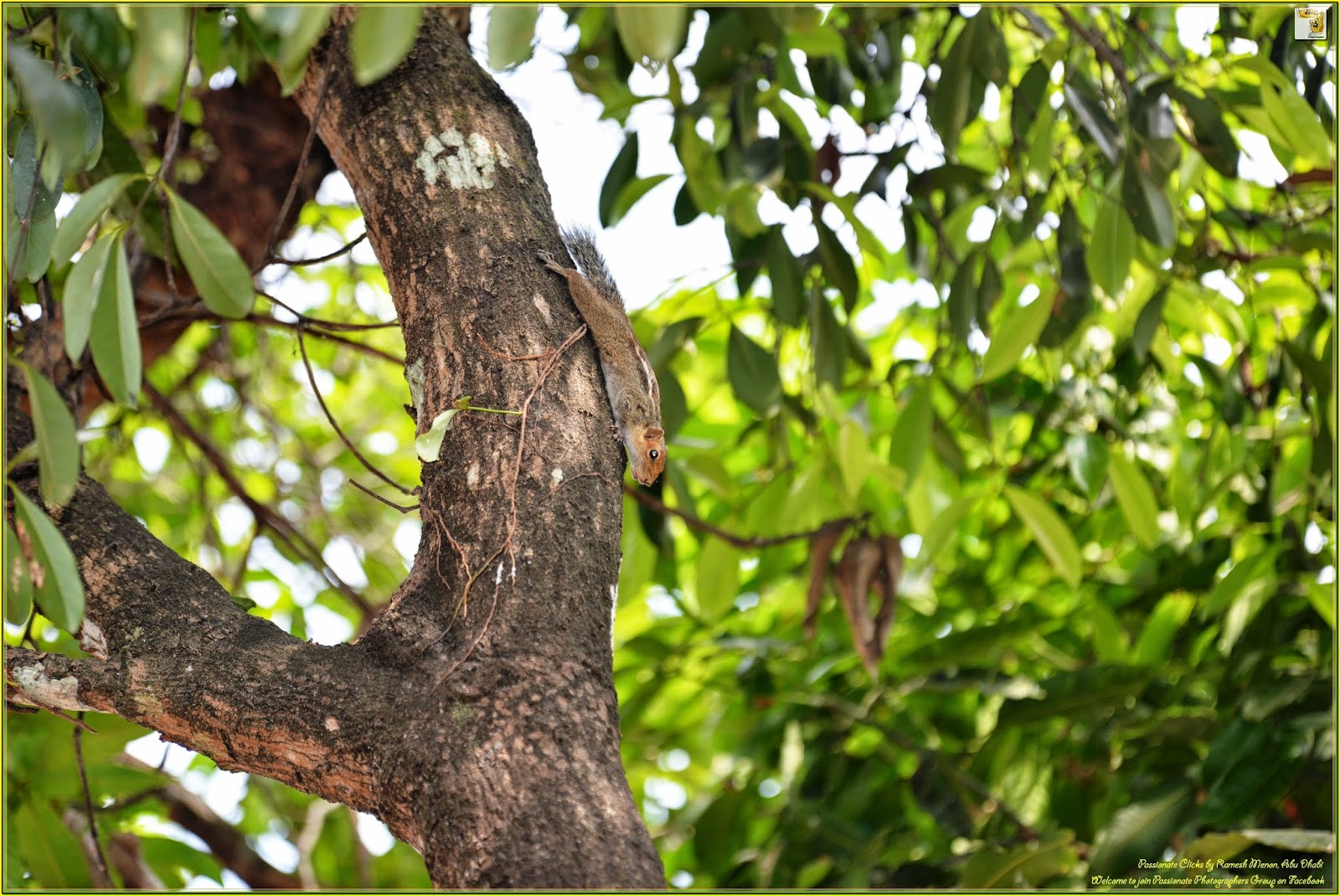
Up, Close and Personal with a Squirrel


Squirrels are members of the family Sciuridae, consisting of small or medium-size rodents.
Squirrels are generally small animals, ranging in size from the African pygmy squirrel at 7–10 cm (2.8–3.9 in) in length and just 10 g (0.35 oz) in weight, to the Alpine marmot, which is 53–73 cm (21–29 in) long and weighs from 5 to 8 kg (11 to 18 lb). Squirrels typically have slender bodies with bushy tails and large eyes. In general, their fur is soft and silky, although much thicker in some species than others. The color of squirrels is highly variable between—and often even within—species.

In general, the hind limbs are longer than the fore limbs, and they have four or five toes on each paw. Their paws include an often poorly developed thumb, and have soft pads on the undersides. Unlike most mammals, Tree squirrels can descend a tree head-first. They do so by rotating their ankles 180 degrees so the hind paws are backward-pointing and can grip the tree bark.

Squirrels live in almost every habitat from tropical rainforest to semiarid desert, avoiding only the high polar regions and the driest of deserts. They are predominantly herbivorous, subsisting on seeds and nuts, but many will eat insects and even small vertebrates.

As their large eyes indicate, in general squirrels have an excellent sense of vision, which is especially important for tree-dwelling species. They also have very versatile and sturdy claws for grasping and climbing. Many also have a good sense of touch, with vibrissae on their heads and limbs.

Most squirrels die in the first year of life. Adult squirrels can have a lifespan of 5 to 10 years in the wild. Some can survive 10 to 20 years in captivity.

Behavior

Squirrels breed once or twice a year and give birth to a varying number of young after three to six weeks, depending on species. The young are born naked, toothless, and blind. In most species of squirrel, only the female looks after the young, which are weaned at around six to ten weeks of age and become sexually mature at the end of their first year. In general, ground-dwelling species are social animals, often living in well-developed colonies, but the tree-dwelling species are more solitary.

Feeding


Squirrels cannot digest cellulose, so they must rely on foods rich in protein, carbohydrates, and fats. In temperate regions, early spring is the hardest time of year for squirrels, because buried nuts begin to sprout and are no longer available for the squirrel to eat, and new food sources have not become available yet. During these times, squirrels rely heavily on the buds of trees. Squirrels' diets consist primarily of a wide variety of plants, including nuts, seeds, conifer cones, fruits, fungi, and green vegetation. However, some squirrels also consume meat, especially when faced with hunger. Squirrels have been known to eat insects, eggs, small birds, young snakes, and smaller rodents. Indeed, some tropical species have shifted almost entirely to a diet of insects.

Text source : Wikipedia
Photo by: Ramesh Menon, Abu Dhabi

Monday, March 23, 2015

Hibiscus rosa-sinensis - a flower with full of medicinal values


Hibiscus rosa-sinensis is a bushy, evergreen shrub or small tree growing 2.5–5 m (8–16 ft) tall and 1.5–3 m (5–10 ft) wide, with glossy leaves and solitary, brilliant red flowers in summer and autumn. The 5-petaled flowers are 10 cm (4 in) in diameter, with prominent orange-tipped red anthers.
National symbol

Hibiscus rosa-sinensis is the national flower of Malaysia, called Bunga Raya in Malay. Introduced into the Malay Peninsula in the 12th century, it was nominated as the national flower in the year 1958 by the Ministry of Agriculture amongst a few other flowers, namely ylang ylang, jasmine, lotus, rose, magnolia, and medlar. On 28 July 1960, it was declared by the government of Malaysia that Hibiscus rosa-sinensis would be the national flower.

The word bunga in Malay means "flower", while raya in Malay means "celebratory" or "grand". The Hibiscus rosa-sinensis is literally known as the "celebratory flower" in Malay. The red of the petals symbolizes the courage, life, and rapid growth of the Malaysian, and the five petals represent the five Rukun Negara of Malaysia. The flower can be found imprinted on the notes and coins of the Malaysian ringgit.

Uses

The flowers of Hibiscus rosa-sinensis are edible and are used in salads in the Pacific Islands.[citation needed] The flower is additionally used in hair care as a preparation. It is also used to shine shoes in certain parts of India. It can also be used as a pH indicator. When used, the flower turns acidic solutions to a dark pink or magenta color and basic solutions to green. It is also used for the worship of Devi, and the red variety is especially prominent, having an important part in tantra. In Indonesia, these flowers are called "kembang sepatu", which literally means "shoe flower".

Hibiscus rosa-sinensis is considered to have a number of medical uses in Chinese herbology. It may have some potential in cosmetic skin care; for example, an extract from the flowers of Hibiscus rosa-sinensis has been shown to function as an anti-solar agent by absorbing ultraviolet radiation.

Medicinal uses

The chemicals in hibiscus flower helps in growth of hair. It reduces dandruff and makes the hair black.

The natural oil in this flower acts as a good conditioner

This flower can be used as natural dye for hair

The oil in this flower can be applied to the skin of patients who are suffering from cellulite which makes the skin to glow

The ash obtained by burning the flower and leaves of this flower can be applied to eyebrows which glazes them black

This flower can be used as shoe polish by rubbing it on the shoe

Hibiscus flower can be used as contraceptive. The oil from this flower is used for abortion in some tribes in Jamaica.

Jamaicans use this flower in herbal tea as it contains many minerals and vitamins

The juice from these leaves and flowers can regularize the menstrual cycle

Ayurveda says the medicine made from its roots can be used as a prevention of venereal diseases.

According to traditional medicine if we eat the buds of white hibiscus flowers early in the morning on empty stomach it should cure all the diseases. We can mix sugar if we are unable to eat directly.

This flower improves digestion. Hence raw flowers are eaten by Hawaiian people, and Chinese eat this flower by making pickle.

The fiber from this stem is qualitative. This can be used in manufacturing of clothes, nets and paper.

The roots of hibiscus are boiled in oil until the water gets evaporated. Then the oil can be applied to the wounds caused by cancer. This can be very useful in initial stage of cancer.

According to the traditional medicine, the flowers of white Hibiscus can be dried in the shade of neem tree. Then they can be powdered and it can be used to fight all cancers.

According to Ayurveda it is good for increasing blood count among anemic people. The bright Red variety that is commonly found in tropical countries is supposed to be the best . The flowers are boiled in a little water and blended in a mixer with roasted cummin seeds and salt and consumed after diluting it to the required level ,for increasing the quantity of hemoglobin .

The flower is also used for hair care. The leaves and flowers are added to hot coconut oil and slowly heated for a few minutes , after which the oil is completely cooled and filtered. The Oil is then stored in bottles and used to apply to the hair . The oil should be massaged into the hair and left for an hour or two after which it can be washed with a shampoo. This treatment when done regularly has been proved to be  very helpful in stopping hair loss and promoting new hair growth.

Hibiscus is famous for its ability to improve hair. Hibiscus when applied to hair promotes hair growth and gives black color to hair. The beautiful flower of the hibiscus plant should be rubbed against head and hair and washed off after 15 minutes. Hibiscus would cool head and promotes hair growth. 

Hibiscus would also prevent hair graying. Applying hibiscus regularly would ensure good health for hair. In Kerala women regularly apply hibiscus flower (chembarathi poovu) and leaves on hair. Kerala women are traditionally having long beautiful hair. Hibiscus is the secret behind the long beautiful hair of Kerala women. Hibiscus flowers are used to prepare oil that promoted hair growth. 
Hibiscus flowers should be cut into small pieces and boiled with oil. Boil till the flowers are cooked in oil. This oil has great medicinal value. This oil would cool head and eliminate headache. It would prevent graying and ensure hair growth. Hibiscus oil also fights off dandruff in hair. If you experience hair loss, dandruff or baldness you can try hibiscus. Hibiscus flowers should be applied on hair (paste of hibiscus flower). Hibiscus can fight skin infections also. Allying hibiscus on hair would clear off any skin infections. Rubbing hibiscus flower paste on skin infections would also be good.

Hibiscus leaves is the best natural shampoo. In Kerala women use hibiscus leaves as shampoo. Hibiscus leaves should be grind and applied on hair. This would thoroughly clean your hair. Using hibiscus shampoo also promotes hair growth.

Hibiscus for weight loss, mouth ulcer, heart problem, constipation and hypertension

Hibiscus (chembarathi chaya in malayalam) decoction helps lose weight. Regular usage is found to help shed weight. Hibiscus flowers is a home remedy for canker sores or mouth ulcers. Apply paste of hibiscus flowers on canker sores. It will be healed soon. Eating hibiscus flowers is found to be strengthening body’s circulatory system. People with high cholesterol and heart problems would be benefitted by hibiscus flowers. Boiling hibiscus flowers in water and drinking this water would be beneficial. Hibiscus is rich in vitamin C. Consuming hibiscus decoction would prevent cold and fever. Being rich with vitamin C hibiscus would boost the immune system. Drinking hibiscus decoction is found to be benefitting hypertension patients also. Hibiscus can refresh people by lessening the feeling of stress.


In India certain varieties of Hibiscus flowers are used for cooking. Hibiscus is supposed to contain some vital nutrients that are essential for the body and in the southern parts of India it is regularly used in cooking.

Text source: Various online sites including Wikipedia
Photo: Ramesh Menon, Abu Dhabi

Sunday, March 22, 2015

Wolrd Water Day 2015

World Water Day 2015 - 22nd March 2015


This is one of the winning entries of Malayala Manorama Jeevajalam Photography Competition 2009 - a photo taken by me at Athirappally Waterfalls, Chalakudy Kerala.


To know more about WORLD WATER DAY, please visit 

http://www.unwater.org/worldwaterday — atAthirappilly WATER FALLS.